Events
- Doctor's Week 2026
- DEEP WELL Forum
- Wellness Innovation Showcase
The Wellness Innovation Showcase occured on June 22, 2026. Please see below for post-meeting materials including agenda, recordings, list of poster presentations, and photo gallery.
All physicians and team members of the UCSD Health community were invited to the 2026 Wellness Innovation Showcase. This year’s program highlighted UCSD leaders who are advancing new approaches to workplace well‑being, along with a poster session featuring ongoing wellness initiatives across the organization.
UCSD’s Innovation Leaders: Alex Khalessi, MD; Karandeep Singh, MD; Marlene Millen, MD; and Chad Osborne, MD shared insights on how AI is shaping wellness and clinical practice within UCSD Health.
Information about program schedule with guest speakers and poster sessions. (UCSD SSO Log-In Required)
Gallery of the Wellness Innovation Showcase. (UCSD SSO Log-In Required)
Recordings of the presentations and panels. (UCSD SSO Log-In Required)
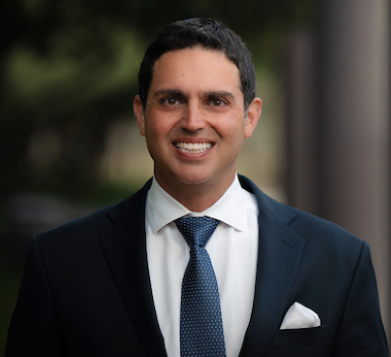 Alexander A. Khalessi, MD, MBA serves as Chief Innovation Officer at UC San Diego Health and Interim Assistant Vice Chancellor for Health Sciences Innovation and AI at UC San Diego. In these dual enterprise roles, he leads strategy for digital transformation, advanced technology adoption, and artificial intelligence integration across clinical, operational, and academic missions. Working closely with leaders across UC San Diego Health, the School of Medicine, and UC Health, he focuses on improving care delivery while strengthening the institution’s national reputation for patient-centered innovation.
Dr. Khalessi is a board-certified neurosurgeon specializing in complex cranial surgery, endovascular neurosurgery, and neurosurgical oncology. He serves as Chair of the Department of Neurological Surgery, a nationally ranked program performing more than 4,500 major cases annually and supporting comprehensive system designations including dual comprehensive stroke centers, level 1 trauma, level 4 epilepsy, comprehensive cancer, and advanced spine services.
A dedicated academic physician-leader, Dr. Khalessi is Professor of Neurological Surgery, Radiology, and
Neurosciences and holds the Don and Karen Cohn Chancellor’s Endowed Chair in Neurosurgery. He has authored more than 150 peer-reviewed publications, delivered over 230 scientific abstracts and presentations, and served as principal or co-investigator on more than 25 clinical trials. His innovation portfolio includes multiple issued patents and leadership in national efforts to advance device development, regulatory science, and health technology evaluation.
Internationally recognized in neurosurgery and medical innovation, Dr. Khalessi chairs both the Neurosurgery
Advisory Council for the American College of Surgeons, the AANS/CNS Washington Committee, and serves on National Institute of Neurological Disorders and Stroke (NINDS) study sections for translational device (NSD-C) and small business (SBIR/STTR) mechanisms. He is a founding member of the Medical Device Innovation Consortium advising the FDA on neurovascular technologies, an inducted member of the American Academy of Neurological Surgery, and past president of the Congress of Neurological Surgeons.
Dr. Khalessi earned a Bachelor of Arts in Public Policy and a Master of Science in Health Services Research from Stanford University. He completed his MD at the Johns Hopkins School of Medicine, neurosurgical residency at the University of Southern California, and received his MBA from the MIT Sloan School of Management.
 Karandeep Singh, MD, MMSc is the Executive Director of the Joan and Irwin Jacobs Center for Health Innovation, Chief Health AI Officer for UC San Diego Health, and Joan and Irwin Jacobs Chancellor’s Endowed Chair and Associate Professor of Medicine in Biomedical Informatics at UC San Diego. In these roles, Dr. Singh oversees AI strategy and governance for the health system and leads AI initiatives within the Jacobs Center for Health Innovation.
Department Wellness Director, Dept of Family Medicine, UC San Diego
 Chad Osborne, MD, is a board-certified family medicine doctor at La Jolla Family and Sports Medicine. He provides primary care for children and teens as well as younger and older adults, including preventive care and treatment of acute and chronic diseases. Dr. Osborne enjoys talking to patients about preventive medicine, a healthy diet, good sleep, self health monitoring, and exercise. He has special interest in sports and musculoskeletal medicine, sleep medicine, and medical informatics. His wellness focus is on improving usability and provider efficiency in the electronic medical record as well as optimizing workflows in the clinical environment to best suit the needs of patients, physicians, and staff. He also has goals of improving collaboration and communication between primary care and specialty departments. He currently serves as the EMR (Epic) champion for the department of Family Medicine.
As an Associate Professor of Family Medicine, Dr. Osborne is highly involved in training medical students and residents at UC San Diego School of Medicine. He earned his bachelor's degree in Kinesiology from San Diego State University and his medical degree at UC San Diego School of Medicine. Dr. Osborne completed his residency training at the Mount Carmel Family Medicine Residency Program in Columbus, Ohio. Prior to joining UC San Diego Health, Dr. Osborne practiced medicine and served as an assistant residency program director at a community hospital in Ohio.
Dr. Osborne's interests outside of work include surfing, mountain biking, skiing, snowboarding, racquetball, squash, basketball, as well as playing in a band and riding dirt bikes with his twin boys.
Two poster sessions will take place at 1:30p-2:00p and 4:00p-4:30p.
| Poster Title | Description | Authors |
Leading the Way to Wellness: Building Wellness Culture
|
Leading the Way to Wellness is a novel professional development curriculum inspired by compassionate communication strategies and wellness-centered leadership approaches, designed to strengthen relational skills, enhance professional fulfillment, and reduce burnout across UCSD Health. |
Ami Doshi, MD; Julie Çelebi, MD |
Burn Bright, Not Out: Fostering Well-Being Through Compassion Training |
Improving the health of the work environment of a progressive care unit through compassionate communication training |
Diana Davalos, MSN, RN, PCCN; Heather Davis MSN, RN, PCCN, SCRN; Heather Fojas, MSN, APRN, ACNS-BC |
Building a Culture of Recognition: A GME Wellness Initiative to Celebrate Residents and Fellows |
This poster highlights the inaugural Thank-A-Resident and Fellow Week, a multi-site GME wellness initiative designed to recognize and express gratitude to UC San Diego Health’s diverse resident and fellow community while fostering connection, appreciation, and well-being. |
Julie Çelebi, MD; Emeline Beltran, MA |
Optimizing UCSDH HEAR 1:1 Wellness Opt-Out Outreach Process for GME Trainees |
In response to evidence that GME trainees face high rates of psychological distress, stigma-related barriers to care, and elevated suicide risk during the first quarter of residency (Yaghmour, 2025), the HEAR Team developed a streamlined workflow for 1:1 Wellness Opt-Out Sessions in 2025–2026, yielding positive results: a 72% increase in program interest, 66% increase in participation, and 25% increase in individual attendance compared to the two-year pre-implementation average. |
Desiree Shapiro, MD |
Mahalo-grams: Harnessing Gratitude to Strengthen Morale and Team Culture in the Emergency Department |
Residency training inherently involves challenges, leading to fatigue and burnout. While institutional validation channels (e.g., Daisy awards) exist, peer-to-peer and supervisor verbal recognition for residents is frequently not as abundant as desired, despite its high correlation with workplace satisfaction. "Mahalo-grams" combine the Hawaiian concept of mahalo with the format of a traditional telegram. This initiative serves as a structured digital framework to capture and distribute expressions of praise and gratitude annually, fostering mindfulness and reinforcing a culture of communal support. |
Leslie C. Oyama, MD; Frances Rudolf, MD; Taylor Murray, MD |
Establishing a Peer Support Program in the Pediatric Emergency Department |
This poster describes the process of developing a physician peer support program in the pediatric emergency department at Rady Children's Hospital. Volunteer peer supporters received training in stress first aid. We used the electronic medical record to track critical incidents such as cardiac arrests and intubations, and proactively contacted physicians involved in these cases. We provided support and mental health referrals as needed. |
Tatyana Vayngortin, MD; Elise Zimmerman, MD, MS; Joelle Donofrio-Odmann, DO; Rachna Subramony, MD; Desiree Shapiro, MD |
Reducing Friction in Mental Health Resource Promotion: A Randomized Study of Email Call-to-Action Placement Among Health Professionals |
In a multi-arm randomized study of physicians (and a nursing replication), placing the call-to-action button at the top of wellness resource emails produced the highest click-through rates, suggesting that immediate visibility reduces friction and improves engagement with mental health resources in time-constrained clinical settings. |
Habib Nguyen-Sabbagh, MHA |
Workflow Innovation by PM&R Physicians and Cultural Transformation in Sports Medicine |
This project evaluates how combining workflow design, AI-driven technology, sustainability initiatives, and an ATC-driven care model can streamline operations, increase throughput, and significantly reduce after-hours documentation burden for PM&R physicians. |
Ken Vitale, MD |
Small Space, Real Impact: Five Months of Utilization Data Making the Case for Resident Fitness Infrastructure at JMC |
We present five months of keycard access data totaling over 1,600 entries demonstrating that a thoughtfully optimized, small-footprint resident fitness room at Jacobs Medical Center drives consistent, around-the-clock engagement among house staff. |
Ruth Laverde, MD |
The Great Gatsby of Burnout: Achievement Addiction, System Failure, and the AI Mirror. |
This poster presentation examines our culture of overachievement, integrating psychiatric perspectives to unpack personal patterns alongside the systemic pressures behind burnout, and uses AI as a mirror to identify practical paths forward. |
Lama Muhammad, MD |
CommUnity Care Clinician Retreat: A Time to Restore, Renew & Reconnect |
CommUnity Care’s retreat united clinicians across multiple sites to combat burnout and build a collaborative, self-compassionate peer network. This initiative will serve to launch a new clinical coaching and mentoring program and provide a framework for future opportunities to work across different geographic locations. Post-event surveys support that prioritizing structured time for provider reflection and connection are important to delivering high-quality patient care. The project was made possible through a combination of a Physician Wellness Culture Award and departmental funding. |
Michelle Kowalski-McGraw, MD |
ME TIME: Mediation Exercises To Improve Mental Wellness and Effective Coping In The Workplace |
Aim: To decrease perceived Stress among JMC 5FG staff nurses through Kelee Meditation practice. Staff nurses experience moderate perceived Stress in caring for complex patients. |
Rowena Laudato, RN |
Enhancing Wellness Among Family Medicine Residents Through Structed Social Engagement |
This poster highlights the activities and events each clinic organized via utilization of grant funding designated only for resident wellness events for non-medicine social outings amongst our clinic families with the goal to increase interconnection and morale between co-residents and improve wellness. |
James May, MD; Allie Mignucci, MD; Divya Reddy, MD |
Milk, Medicine, and Policy Change: Leading the Way to Equitable Lactation Support |
Returning to clinical work while lactating presents unique challenges for physicians. Our poster highlights recent efforts to advance equitable lactation support policies for faculty at UCSD Health. |
Jennifer Quartarolo, MD; Marcella Katsnelson, DO; Sherry Zhand, MD; Catherine E. Firestein, MD, MPH; Bethany Karl, DO |
Implementing a Family Medicine Order Panel Library to Improve EMR Efficiency and Workflow |
This resident-led quality improvement project, which developed and implemented 22 standardized, evidence-based order panels for common primary care chief complaints, demonstrates the feasibility of using clinical decision support tools to reduce cognitive burden and improve provider efficiency in the outpatient setting. |
David Mata, MD; Jenny Thai, MD; Zach Pope, MD, MPH; Chad Osborne, MD |
Walk for Wellness |
The Walk for Wellness project serves to facilitate teams and visitors getting outside and walking, cultivating our physicial and mental health. |
Lilia Byrnes, MBA; Habib Nguyen-Sabbagh, MHA; Brenna Joyce, MA; Laura Rossi; Lisa Erickson, DNP, ACNP-BC; Audrey Hilliard, MS |
Pilot Milk: 2-year Pilot of the UC San Diego Physician Group Lactation Accommodation |
Results of the first 2 years of the UC San Diego Physician Group Lactation Accommodation pilot program to support lactating physicians in the outpatient clinical space upon return from parental leave. |
Bethany Karl, DO; Sherry Ann Camarillo; Amanda Thompson; Lydia Ikeda, MBA; Christopher Kane, MD |
A Taste of Our Own Medicine: A System-Level Intervention to Improve Physician Access to Primary Care and Mental Health Services |
We found that our physician-specific call line facilitating primary care and psychiatric appointments improved scheduling ease, reduced stigma associated with seeking care, and increased preventive health behaviors, offering a scalable blueprint adaptable across other health systems. |
Tam Le; Habib Nguyen-Sabbagh, MHA; Savita Bhakta, MD; Sonia Ramamoorthy, MD, MBA; Minh Tran, MD |
Time is Care: Anesthesiologist Perspectives on OR Transport Delegation and Workflow Optimization |
It is an assessment of anesthesiologist perspectives on a wellness initiative adopting a patient transport model currently in place at KOP/MOP in which non-anesthesia personnel bring patients to the OR and as such, improve first case on time start (FCOT) and allow for more time for perioperative care. |
Stacy Moroz, MD; Minh Tran, MD |